Buy.
Nice is expensive.
Kindness is a discipline.
Act as you want your team to act.
Talk with them often.
Help them grow.
Change people when needed.
If you lead people, that’s the bulk of your time. You’ll have strategic and operational things to do too. But the team is your work. The whole team. Keeping the wrong people is a drain on the right ones. That’s why changing people when needed is kind.
Read the sample below or download it.
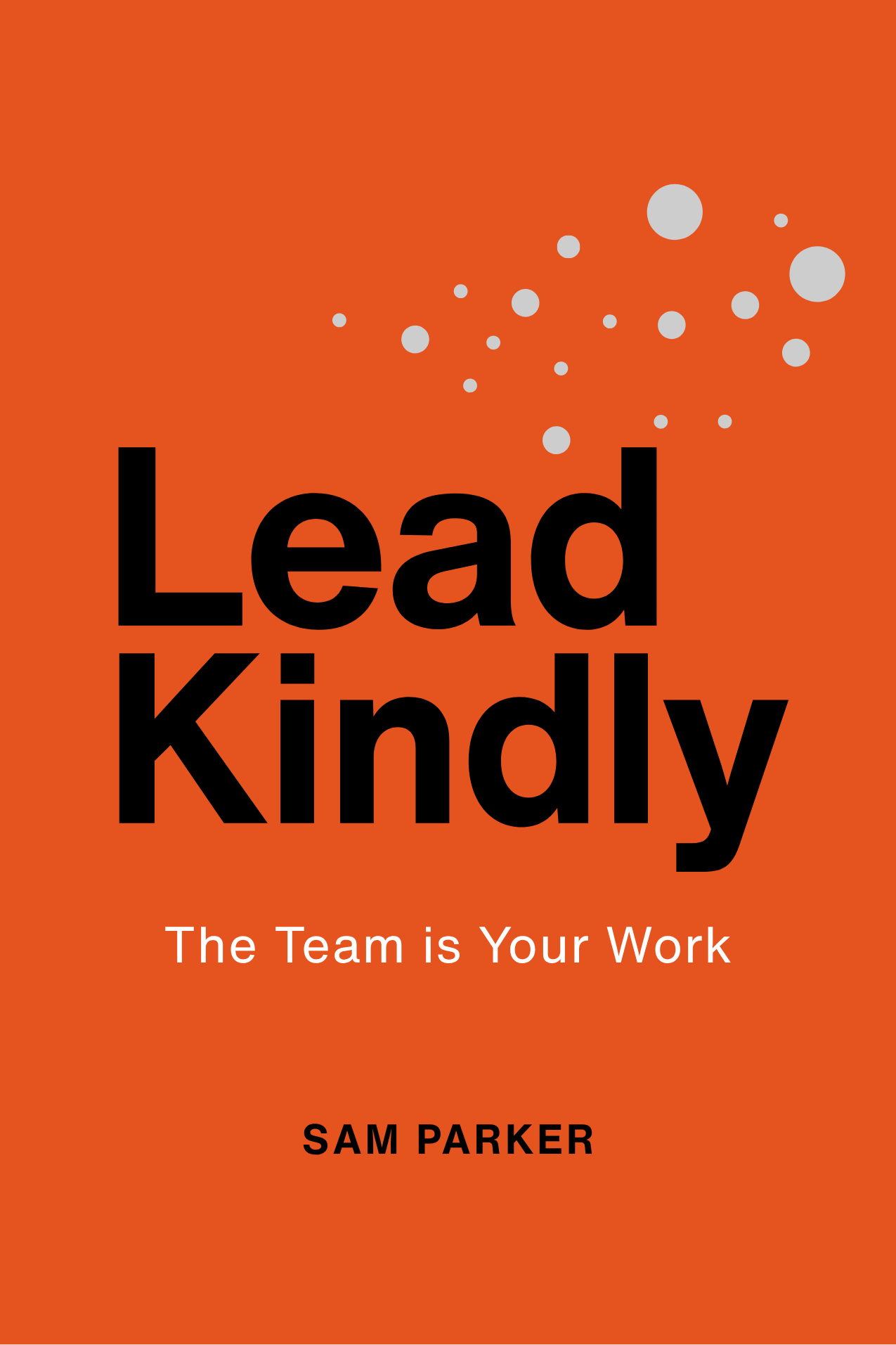
From the author of 212° the extra degree (over 1 million copies sold), Lead Kindly is a no-fluff call to do the leadership work that matters, not just what seems easiest.
Inside this 1-hour read:
How to move a team from performative to real performance
How to recognize the types of people in your organization (Movers, Floaters, Fakers, Stones) and respond to each
How to build trust by minimizing ego, communicating with results in mind, and setting the example for your team
How to help people grow and consistently take ownership of their work
Why keeping the wrong person is unkind to everyone else, and how to handle it well
Paperbacks and ebooks available at Amazon. (As an Amazon Associate, I earn from qualifying purchases.)
Read the sample below or download it.
Preface: Not the Rule
“But what about [INSERT LIONIZED UNPLEASANT LEADER]? Look at all they were able to accomplish.”
That’s a question I’ve gotten many times over the years, long before I wrote this book.
A few things to consider—
No one drives everything on their own. Whatever that leader gets credit for was accomplished with other people. And those people succeeded despite the unpleasant leader, not because of them. We get the summary without the full story.
How many talented people left because of the leader or culture? What ideas were never shared? How many people yessed their way through the day to survive? Could they have had even better results with a kinder approach?
You have a choice those leaders chose not to make.
The people around you will feel your choice every day.
Chapter 1: Lead Kindly
Act as you want your team to act.
Talk with them often.
Help them grow.
Change people when needed.
If you lead people, that’s the bulk of your time. You’ll have strategic and operational things to do too. But the team is your work. The whole team. Keeping the wrong people is a drain on the right ones. That’s why changing people when needed is kind.
Take care of the team, more good things will happen. Neglect it too often, all kinds of pain.
Good leaders build a team that’s diligent, honest, trusting, and transparent while focused on the organization’s reason for being.
Diligent: Having or showing care and conscientiousness in one’s work or duties. Many people only hear ‘hard worker’ in that word. It’s richer. It’s thoughtful and deliberate.
Leadership is a wonderful, never-ending challenge for people who care about people.
But with a few years of experience, most of us know it’s the consistent execution that’s the challenge. Not the how, but the doing all the time. And the possible failure points are many, some in your control and some not.
If you have a product or service everyone wants or must have, captive demand where customers have few real choices or can’t afford to leave, it’s easy to see how culture might not be a priority beyond words. (Think some healthcare organizations, utilities, government agencies, education, and enterprise technology.) You just have to be comfortable with the costs and ugliness of churning and burning people, resigning to an unpleasant culture being the best you can do. Not a great way to spend the day, but as long as the organization can pay everyone, it works for some.
Everyone plays a part, title or not. But leadership is where the power is.
Undiscussed truth: The real power lies with money. There are other factors too: inertia, fear, identity, relationships, career timing, and geography. But few people will tolerate a bad leader or culture for long if they don’t need the cash. Pay them incredibly well, and they might tolerate both for longer. But most will leave once they’ve got their freedom fund or a better way to spend their finite time.
Most of a leader’s value to an organization comes from how well they build and develop a strong team of people who get the necessary and meaningful work done, kindly. That involves hiring well, nurturing the ongoing pursuit of better work, and identifying and developing future leaders. That’s how you create a special culture that people want to be a part of.
Fun words on your reason for being: Raison d'être [RAY-zawn deh-TRUH] is the fancy French way to put it. The Germans go further with Daseinsberechtigung (DAH-zyns-buh-RECHT-ig-ung). It’s not only the reason for someone or something’s existence. It’s also justification for that existence. Heavy.
Chapter 2: People
Most data points to a world where a minority of people are fully engaged at work. With more than a few decades of experience and research, I’ve landed on 4 basic types: Movers, Floaters, Fakers, and Stones. (Textbook wouldn’t be as much fun.)
Movers work to make good things happen.
They can be Drivers, Doers, or both. They focus on moving things forward. They lean toward progress, doing it kindly. These are the people we admire.
Floaters do what they have to do to stay afloat.
They rarely initiate or reach. Some hide. They don’t want to be seen. Don’t want their calm (stagnant) waters rippled up.
Some don’t trust how much more fun it is to make things wonderful. They might understand the aspiration, but they’ve been burned too many times or once too harshly. Risks taken with bad consequences. They train themselves to stop reaching. Reasonable and sad.
Fakers perform progress without making it. They talk. They want to be seen.
Some work almost as hard at faking as Movers do at moving. People can work around a Floater. A Faker distorts reality. Too many years in the wrong habits.
Stones are weight—bad weight. Drag.
Few people are born as Stones, just a lot of bad luck along the way that hardens into habit. There, but by the grace of chance, go any of us, if we’re not careful. Again, reasonable and sad.
You do your best to hire Movers. But sometimes you inherit people who aren’t. And, people change.
Choices
There’s mobility in these roles.
People can move in and out of them, positively and negatively, consciously and unconsciously. So many variables and choices all the way through.
We all carry different experiences and genetics into the day. Some of us might have an easier time making better choices and holding to those choices than other people. Some people might have better influences on their path than others. They might have more engaged, nurturing, and positive people who help them along the way (parents, friends, leaders, teammates, you). Others might have gifts that others don’t: talent, intelligence, curiosity, etc.
Choices are still there. People just need to do their best to stay attentive, awake.
A couple of unlucky turns of the knob and a Mover might become a Floater. The change doesn’t have to be permanent. But without a few good choices, nudges, or experiences before the next challenge, it might be.
Good news: Floaters can step up into being Movers. Bad news: they can sink into Stones. Fakers, same thing.
Tough to get out of being a Stone without a shock. Not impossible, but the odds aren’t good.
“The last of the human freedoms—to choose one's attitude in any given set of circumstances, to choose one's own way.”
Victor Frankl
Austrian neurologist and psychiatrist
1905 – 1997
Leaders
I share these labels with someone, and often the assumption is that I’m talking about people who aren’t leaders of people. I am. But if we do the math on this, given where the power is, if a leader isn’t a Mover, that’s a big problem. Floaters, Fakers, and Stones in leadership roles allow unnecessary pain and expense to continue.
Leaders who are Movers consistently develop and strengthen—
Good people who are diligent, honest, trusting, and transparent while focused on the organization’s reason for being.
Side note: If you’re a for-profit person, please don’t let me lose you to a concern that I’m saying a beautiful net income or stock price isn’t part of that. They are. They’re what happens when you do the people work right.
Oh, and: "We’re good people. We’re diligent, honest, trusting, and transparent while focusing on our organization’s reason for being.” Could be a useful organizational reminder. Not something to say, brag, or put on a website, but something to live through action.
1 unfortunate truth
It’s hard for leaders to be consistently consistent. If it weren’t, employee engagement numbers wouldn’t be as sad as they are. On top of that, we’ve got a never-ending library of real-world organizational dysfunction stories we can always learn from—the small to the extreme.
Mix the human challenge with the external challenges (e.g., other people, organizational history, cemented systems and incentive structures, competitive landscape, media influences, the unknown), and you can see how, over time, many people resign themselves to mediocrity and/or a culture based on control, fear, opacity, exclusion, and what’s always been.
That’s when the leaders of leaders need to do their job. It’s the same work, with maybe less attention on developing others depending on the level. And just as people and leaders of people aren’t always Movers, the same is true with leaders of leaders.
So what’s the work?
Act as you want your team to act.
Talk with them often.
Help them grow.
Change people when needed.
That’s kindness—the path to a much better day for everyone.
Chapter 3: Act as you want your team to act.
I’ve never talked with a leader of people who openly disagrees with the importance of acting as you want your team to act.
Lead by example is a cliché many of us start hearing by the age of 10. Daily, we’re reminded of the behaviors that matter through the good, mediocre, and bad examples displayed by the actions (or inactions) of others: be kind, patient, calm, thoughtful, honest, enthusiastic, encouraging, focused, appreciative, apologetic, caring, humble, and resilient.
Act is a beautiful word. It covers the doing and the behavior.
act: v. 1. take action; do something 2. behave in the way specified
“Manners are the lubricating oil of an organization.”
Peter Drucker
Austrian-born American management icon
Presidential Medal of Freedom recipient
1909 – 2005
If leaders with the ability to pause and act appropriately take advantage of it more, everyone wins. Better examples enter the air for others to see and feel, improving the odds that others will act similarly. More good actions, the culture positively reinforces itself. Fewer, and it slides.
You’re the leader. You drive all of it.
You have many variables and constraints outside of your control, just as everyone does. But your work is the team.
Outside of the obvious desirable behaviors listed above (that you’ve likely been practicing your entire life) are 2 very important things that are the root of all of it.
Less ego. Better communication.
Ego
Is there a human being who enjoys working with a leader with an inflated sense of self-worth?
Less self is the first act of acting as you want others to act.
The challenge is consistently balancing confidence and humility well. Leaders who can minimize their ego through self-awareness and humility inspire people to stay focused on doing the right work better. They establish an unselfish tone that tends to spread and minimize distraction, a much better fire to fan than the opposite.
How?
Pause more before responding. Short-circuit the ego. Don’t allow it to talk first.
Look hard for opinions that differ from yours and the group. Make it safe for people to offer those opinions. That’s trust. Almost everything in this book feeds it.
Make it a habit to ask yourself and others what you’re missing.
Enter conversations without a personal agenda. Open minds create better outcomes.
Give others credit where it’s deserved. Fast.
Own any mistakes you can reasonably own. Be careful. Inauthenticity here is its own ego trip. It smells of performance.
Don’t perform certainty. Uncertainty is often present. Showing that you don’t have all the answers promotes honest conversation and engagement.
Remind yourself often, maybe a couple of times a day, that your work is the team.
Don’t complain to or around your team. That’s ego asking for an audience. It distracts, and it’s contagious.
When you make a mistake with any of these points, apologize immediately, in the moment, in front of whoever is there.
Reflect weekly on your practice of less you. (Daily?) Be as objective as possible. Avoid coddling yourself. (Yes. That’s ridiculously tough.)
If you want your team to be coachable, you should be coachable. Develop at least a couple of relationships with people who’ll tell when you’re a problem. (That’s love.)
Signs you’ve got work to do—
You hear yourself talking more than you listen.
You’re surprised when someone disagrees with you.
You can’t remember the last time someone changed your mind.
You’re uncomfortable giving someone credit.
You’re rarely wrong in your eyes.
Feedback from others is always positive.
Wins feel like yours. Failures feel like theirs.
Few people push back on anything you say.
You don’t have a relationship with anyone who tells you uncomfortable things.
Less ego. Better communication.
“At no time should you overvalue your own thoughts. You should allow yourself to be humbled daily with new ideas that challenge any or everything that you currently think. That's wisdom. I think.”
Neil deGrasse Tyson
American astrophysicist
NASA Distinguished Public Service Medal
1958 —
Communication
It’s spoken and unspoken, written and unwritten. Everything you do or don’t do communicates something to your team that’s watching all the time. You decide what you want to plant.
Be clear.
Listen well.
Be direct.
Be transparent.
Be brief.
Close loops.
Be responsive.
Be consistent in public and private.
Use the right channel.
Stay aware of your demeanor.
Be clear.
Clarity is critical. It impacts everything else.
A good place to start is to ask yourself what you want the recipient(s) to think about, talk about, or do as a result of what you communicate. Avoid starting with what you want to say.
What do you want to happen?
Hard to do all the time, especially in quick, unplanned settings, but there are plenty of written and spoken opportunities for improvement. And the better you practice in those settings, the better you’ll do in unplanned settings. It’s self-nurturing.
What’s the goal? What do you want to encourage or inspire? What do you want to stop or improve? What do you want to move forward?
Paperbacks and ebooks available at Amazon.
(As an Amazon Associate, I earn from qualifying purchases.)
Please email with comments or questions about the book.
© 2026 212 Books | Richmond, Virginia USA | 804-335-1283